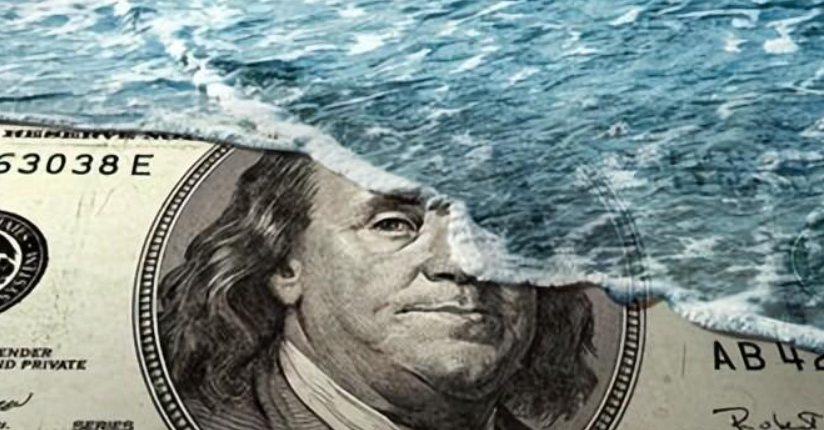
Headlines scream about de-dollarization and companies fleeing overseas. Politicians warn of American decline. The question "Is capital moving away from the US?" feels urgent. But if you look past the alarmist takes and dig into the numbers from sources like the Bureau of Economic Analysis (BEA) and UNCTAD, a more nuanced, and frankly, more interesting picture emerges. Capital isn't just packing its bags and leaving in a simple exodus. It's reorganizing, reconsidering, and flowing in multiple directions at once—some out, some in, and a lot just changing its form.
My two decades watching global investment trends have taught me that panic is a poor investment strategy. The real story isn't a binary yes or no. It's about understanding the push and pull factors, identifying which sectors are vulnerable, and recognizing where America still holds an iron grip. Let's cut through the noise.
What You'll Find Inside
- The Hard Numbers: What FDI and Financial Flows Reveal
- Why Capital is Rethinking Its US Strategy
- The Onshoring Counter-Wave: Capital Coming Home
- What This Means for Your Investment Decisions
- Your Burning Questions Answered
The Hard Numbers: What FDI and Financial Flows Reveal
Let's start with Foreign Direct Investment (FDI)—when a company builds a factory or buys a substantial stake in a foreign business. This is "sticky" capital, the kind that creates jobs and long-term commitments.
Look at it this way. The US remains the single largest recipient of FDI in the world, year after year. The pie is just getting more slices. Capital is flowing to Southeast Asia, India, and parts of Europe too. It's diversification, not abandonment.
| Indicator | Trend (Recent Years) | What It Suggests |
|---|---|---|
| FDI Inflows to US | Volatile, lower than mid-2010s peak | Reduced relative attractiveness for *certain types* of greenfield investment. |
| US Outbound FDI | Remains robust | US companies are still globalizing, seeking growth and efficiency abroad. |
| Portfolio Flows (Stocks/Bonds) | Net inflows continue, but with more volatility | The US financial market's depth and liquidity are still unmatched, but confidence wobbles with politics and rates. |
| Venture Capital Funding | US dominance challenged, but still leads | Silicon Valley isn't the only game in town anymore (see: Shenzhen, Bangalore). |
The financial flow data from the IMF and Treasury is even more telling. When geopolitical tension spikes, you see short-term money flinch. But the bedrock institutional money? It's slower to move. They can't just pull trillions out of the S&P 500 because of an election cycle. The cost of exit is astronomical.
Why Capital is Rethinking Its US Strategy
So, if there's not a full-scale flight, why does it feel like capital is getting skittish? Because the risk-reward calculation has changed. It's not one thing; it's a cocktail of pressures.
Geopolitical Friction and Supply Chain Anxiety
The US-China decoupling isn't a theory; it's an operational manual now. Companies that built intricate supply chains through China for 30 years are being told by boards and shareholders to de-risk. This often means moving *some* capacity out of China, but not necessarily to the US. Vietnam, Mexico, and India are huge beneficiaries. For a US-based firm, building a factory in Mexico is counted as outbound FDI, even if its primary goal is to serve the US market more reliably. The headline "US company invests abroad" masks a strategy of nearshoring for resilience.
The Cost Equation: Not Just Wages Anymore
Everyone talks about high US wages. That's old news. The new pain points are less obvious but sharper. Regulatory complexity that varies by state and city. A tort system that invites litigation. And perhaps most critically, energy costs and reliability. A semiconductor fab or a battery plant gulps electricity. When companies like Intel or TSMC scout locations, they're not just looking at tax breaks; they're looking at the long-term stability and price of power. Places with sustained industrial policy (like parts of Asia) or abundant natural gas (like the Middle East) have a new edge.
I've sat in meetings where a single, obscure permitting delay in the US added millions to a project's cost, killing its internal rate of return. In other jurisdictions, that process is streamlined, not out of corruption, but out of a strategic priority to attract investment. The US is often its own worst enemy here.
The Onshoring Counter-Wave: Capital Coming Home
This is the part most doom-and-gloom analyses gloss over. While some capital seeks alternatives, a powerful, policy-driven wave is pulling other forms of capital back to American soil. Call it the "Great Reshuffle."
The CHIPS Act and the Inflation Reduction Act (IRA) aren't just pieces of paper. They are massive capital allocators. We're talking hundreds of billions in subsidies, tax credits, and loan guarantees. This isn't speculative money; it's concrete investment triggered by policy.
- Intel is building mega-fabs in Ohio and Arizona, investments that were borderline unthinkable five years ago.
- TSMC, the Taiwanese chip giant, is expanding its Arizona campus, bringing its ecosystem with it.
- Tesla, Ford, GM are racing to build battery and EV plants across the Midwest and South to tap into IRA credits.
This capital is moving *to* the US, decisively. It's often targeted, high-tech, and manufacturing-focused. The narrative of pure capital flight completely misses this. The story is one of selective retreat in some areas and aggressive, subsidized advance in others.
The mistake is viewing "capital" as a monolith. Pension fund money in Treasuries is different from a German automaker's factory investment, which is different from a Silicon Valley VC fund. They're all reacting to different signals.
What This Means for Your Investment Decisions
Okay, so capital flows are messy. How do you, as an investor or business owner, navigate this? You stop thinking in terms of countries and start thinking in terms of themes and concrete advantages.
Don't bet against the US financial ecosystem. The dollar's dominance, the depth of the bond market, the liquidity of the Nasdaq—these are not easily replicated. Geopolitical shifts happen over decades, not quarters. Short-term volatility is a buying opportunity, not a signal to flee.
Do bet on the onshoring winners. This is the actionable insight. The companies building the physical infrastructure for the new industrial policy—factory automation, construction engineering, specialized materials, and yes, the utilities that will power it all—are positioned for a multi-year tailwind. Look at the publicly traded firms that are key suppliers to these giant new projects.
Diversify geographically, but intelligently. Having exposure to markets benefiting from supply chain diversification (like Mexico's manufacturing or India's tech services) is prudent. But do it because they're good growth stories, not because you're scared out of America.
The biggest error I see? Investors conflating political headlines with market fundamentals. The US economy has a terrifying habit of innovating its way out of problems. That capacity for reinvention is a form of capital that never shows up on a balance sheet but is perhaps its most valuable asset.
Your Burning Questions Answered
If capital is leaving, does that mean I should pull my money out of US stocks and bonds?
That's likely an overreaction. The capital we're talking about leaving is often specific, long-term industrial investment or short-term "hot money" spooked by headlines. The foundational capital in US public markets—index funds, pension allocations—isn't going anywhere fast. The transaction costs and lack of comparable alternatives are too high. A diversified portfolio should always have global exposure, but abandoning US assets based on this trend is premature. Focus more on sector selection within the US (e.g., industrials benefiting from onshoring vs. consumer discretionary facing headwinds).
What's the single biggest factor that could accelerate capital flight from the US?
A loss of institutional integrity. Not a change in tax policy or a regulatory shift, but a perceived erosion in the rule of law, property rights, or the sanctity of contracts. If investors start to believe that the legal and political system is no longer predictable or fair, that's when the deep, sticky capital gets nervous. It's a slow-moving factor, but it's the bedrock. So far, despite political polarization, the US institutional framework has held. Watching that is more important than watching the daily political drama.
Is the US dollar's status as the world's reserve currency in danger because of this?
It's under pressure, but "in danger" of immediate replacement is an exaggeration. The dollar's role is supported by a network effect: global trade contracts in dollars, commodities are priced in dollars, and most importantly, there is no clear, single alternative with the same depth, liquidity, and political stability. The Eurozone has its own fractures, China's capital controls make the yuan impractical for free global use, and no other economy is large enough. What we're seeing is a gradual, incremental move toward a more multipolar currency system—a process that will take a generation, not a news cycle. For now, the dollar's privilege acts as a giant magnet, pulling capital back during global crises, which ironically reinforces its status.
As a small business owner, should I be worried about access to capital?
Your concerns are more local and practical. The global capital flow debate impacts you indirectly. The direct impact is interest rates (set by the Fed) and regional lending conditions. If large manufacturers move into your region due to onshoring, it could tighten the labor market and increase your costs, but also bring more customers. Your focus should be on building a resilient business model that isn't dependent on ultra-cheap capital, which is gone for the foreseeable future anyway. For funding, explore regional banks, Small Business Administration (SBA) loans, and alternative lenders—their decisions are less tied to these macro flows than giant multinational banks.
The bottom line is this: asking "Is capital moving away from the US?" is the right question, but it demands a layered answer. Yes, some is. For good, rational reasons tied to cost, risk, and new opportunities elsewhere. But simultaneously, a huge wave of strategic, policy-driven capital is being planted firmly back into US soil. The net effect isn't a collapse; it's a transformation. The US is losing its undisputed, default status for every kind of investment and is being forced to compete more aggressively for the high-value, future-defining capital it wants. That's a healthier, though more challenging, position to be in. For the astute observer, it's not a crisis—it's a map of where the opportunities and risks will be for the next decade.